Transitional Neighborhoods in Coconut Grove: Early Opportunity or Fully Priced?
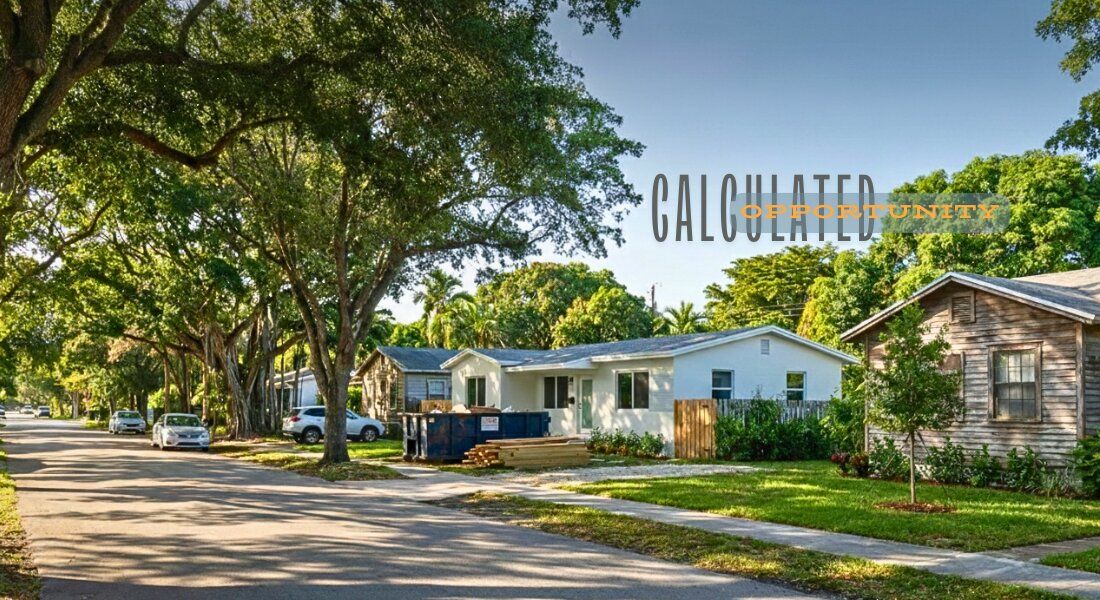
One of the most overlooked opportunities in Miami real estate lies in what many buyers call “the in-between streets.” These transitional pockets in Coconut Grove often reveal whether a neighborhood is still an early-stage opportunity or already priced in.
Here, you’ll notice:
- 1930s-1950s homes still standing
- Developers snapping up lots for rebuilds
- $4-$6M new homes next to teardowns
For buyers who understand the signals, these contrasts are not red flags. These are opportunities to enter before prices fully reflect the neighborhood’s upside.
What “Transitional” Actually Means
When I say transitional, I’m not speaking in code. I’m describing visible patterns of redevelopment unfolding on specific blocks.
Look for:
- Original small homes selling at land value
- Builders adding modern townhomes
- Infrastructure slowly improving
- Streets that mix polished homes with older, worn properties
It’s not uniform, and that’s the point. Transitional doesn’t mean unstable; it means mid-conversion. These neighborhoods are in motion.
The contrast can feel uncertain to buyers driving through. Change in progress isn’t decline. Often, it signals the opposite.
Why Developers Are Focusing Here
Developers are highly strategic. They focus on:
- Lower-cost land parcels
- Proximity to desirable corridors like US‑1
- Zoning that supports higher-value builds
- Blocks already showing upgrade momentum
As capital flows in, the character shifts. Renovations become rebuilds. Teardowns turn into architect-designed homes. Streets that once felt uneven start to feel intentional.
No transformation comes automatically, but in Miami, concentrated redevelopment often accelerates once it gains traction. That acceleration creates the opportunity window. In these neighborhoods, timing matters more than perfection.
Spotting the Opportunity Window
In a fully stabilized neighborhood, prices reflect finished conditions:
- Polished homes
- Mature landscaping
- Completed renovations
- Top-of-market comparable sales
In a transitional neighborhood, pricing reflects mixed conditions:
- Visible construction
- Older or unrenovated homes
- Blocks that are not yet cohesive
That gap between current perception and future potential is where opportunity lives. Buyers can enter at a lower price point and position themselves for long-term alignment with Coconut Grove’s evolving character.
Buyer Mindsets in Transitional Areas
In transitional areas, buyers usually fall into one of two camps:
- Type A: “I don’t like the uncertainty. I want it fully established.”
- Type B: “If this is what it looks like now, imagine it in three years.”
Neither is wrong. It comes down to temperament and timeline.
If you need immediate uniformity, transitional neighborhoods can feel stressful. If you’re willing to live through a few years of visible change, the upside can be significant.
Self-awareness matters as much as market awareness.
Why 2 to 3 Years Can Make a Difference
In many Coconut Grove neighborhoods, continued redevelopment at the current pace suggests you can expect:
- Older homes replaced
- Streetscapes gradually improved
- Property values stabilizing at higher levels
- Fewer teardown neighbors
This transformation is gradual and often uneven at first. Buyers entering during the transition phase benefit from pricing that reflects mixed conditions rather than finished ones. Over time, as blocks become more cohesive, comparable sales begin to reflect the shift.
For data-minded buyers, reviewing local sales trends and building permit activity provides helpful context. Public records and resources, such as Miami-Dade County’s Property Appraiser, make this information accessible.
Patience is not passive. It’s strategic.
Measured Patience in Action
A corporate relocation client from Europe hesitated over a transitional pocket just west of Main Highway in Coconut Grove. The new townhome they were interested in buying was beautiful, walkable to amenities and matched their needs and aesthetics perfectly. But, the neighboring properties were teardown candidates, and the street felt uneven and unattractive.
Their first reaction was discomfort. They had just moved schools, relocated jobs, and adjusted to Miami’s climate. Nearby construction felt overwhelming.
We stepped back and reviewed the data:
- Recent land-value sales closed to builders
- New construction permits filed
- Zoning supported single-family redevelopment
- Market demand was consistent
They chose to move forward. Within two years, developers replaced neighboring homes with architect-designed residences, landscaping matured, and the block felt cohesive. Their property value followed.
Evaluating Risk and Reward
These opportunities come with a balance of risk and reward that buyers must consider.
Common risks include construction noise, temporary visual inconsistency, and short-term uncertainty from nearby active building sites.
However, the upside is that buyers can enter the block at a lower entry price than when it is fully stabilized. There’s also stronger long-term appreciation potential.
When supported by zoning analysis, permit activity, and sales data, this isn’t speculation. It’s strategic positioning. Assess risk, don’t let it control you.
Transitional Neighborhoods for Relocation Buyers
Buying in a transitional neighborhood can feel uncomfortable at first. The effect intensifies when you’re already adjusting to a new city, new job, different climate or new school system. Visible redevelopment adds another layer of uncertainty.
That’s understandable. Yet some of the most stable long-term decisions occur in neighborhoods still becoming what they will be. Coconut Grove has a long history of reinvention, supported by local planning initiatives and Miami’s long-term growth patterns.
Stability is often about trajectory, not just current appearance.
Is a Transitional Neighborhood Right for You?
Transitional neighborhoods are not for everyone. If short-term calm and visual uniformity matter, fully established sections of Coconut Grove may suit you better.
That said, skipping these areas outright can mean missing strategic market entry points. Patient, data-driven buyers comfortable with change can find opportunity and long-term stability here.
The key is clarity about your timeline and tolerance for change.
FAQs About Transitional Neighborhoods in Coconut Grove
Are transitional neighborhoods safe investments?
No investment comes with a guarantee, but concentrated capital flow and permit activity often signal directional stability. Reviewing local data before purchasing is essential.
How long does a neighborhood typically stay in transition?
It varies by pocket. In Coconut Grove, noticeable shifts often take two to five years once redevelopment gains momentum. The pace depends on land availability, builder activity, and broader market trends.
Will construction next door hurt my resale value?
Active construction can influence short-term perception. Long-term, new neighboring homes typically elevate block value and improve comparables.
How can I tell if redevelopment is accelerating?
Look for multiple land-value sales, active building permits, and repeated builder activity on the same block. A single new build rarely signals momentum. Three or four is more indicative.
Are transitional areas only for investors?
No. Many owner-occupiers choose them intentionally for long-term living. The key is comfort with visible change during the transition.
Is financing harder in transitional neighborhoods?
Typically not for standard single-family homes. Properties sold strictly at land value or needing major renovation may require alternative loan structures.
Does my timeline fit the neighborhood?
If you can wait for gradual improvement instead of instant polish, the property likely aligns with your goals. Short-term moves are better suited to fully established neighborhoods.
Explore Your Transitional Opportunity Today
If you’re weighing whether a transitional block fits your goals, focus on data, context, and clarity. When the neighborhood’s direction is strong, patience becomes a powerful advantage.
When you’re ready to start, contact us to discuss your options.