Radon Testing Is Changing the Conversation Around Miami Condos
Radon testing is becoming a more important consideration in Miami condo transactions. Buyers are paying closer attention to indoor radon levels during due diligence, particularly in high-rise buildings.
A specific incident at a Coconut Grove building has raised a larger question for the Miami market. If building materials can contribute to radon levels, what other buildings could be affected?
Elevated radon levels at a Coconut Grove new construction building have raised new questions about radon in Miami condos. Building materials were identified as a possible source, raising new questions about radon testing during condo transactions. Testing early gives buyers and sellers more information before negotiations begin.
The Coconut Grove Radon Problem
Elevated radon levels turned up at Mr. C Residences in Coconut Grove. What made the situation unusual was the suspected source. Investigators reportedly traced the issue to radon associated with the concrete used during construction, rather than soil entering through the foundation.
Most indoor radon comes from soil or rock beneath a building. Building-material-related radon could affect multiple units within the same structure. Testing is still necessary to determine the extent of elevated levels.
The building’s initial guidance to residents was to run kitchen exhaust fans continuously and open windows for ventilation. The issue remains unresolved, with no clear remediation timeline.
The Concrete Question for New Construction
The Coconut Grove situation raises a question that does not yet have a definitive answer: could other new construction buildings face similar concerns?
EPA research confirms that some building materials can contain naturally occurring radioactive materials that can produce radon as they decay. Materials used in concrete can contribute to indoor radon levels in some circumstances. However, EPA says building materials rarely cause radon problems by themselves.
Debra has seen the issue come up through her work with buyers and sellers across Coconut Grove, Coral Gables, Pinecrest and Palmetto Bay.
“I suspect it will be a concern for buyers and sellers of many new builds. If there’s radon in the concrete, in the material they’re quarrying, it will show up structurally, in foundations and walls. Radon testing will be standard operating procedure from now on.”
— Debra Wellins, Luxury Real Estate Advisor, Berkshire Hathaway HomeServices EWM Realty
Her prediction points to a question that testing can help answer: whether a particular building has elevated radon levels.
What to Expect From a Professional Radon Test
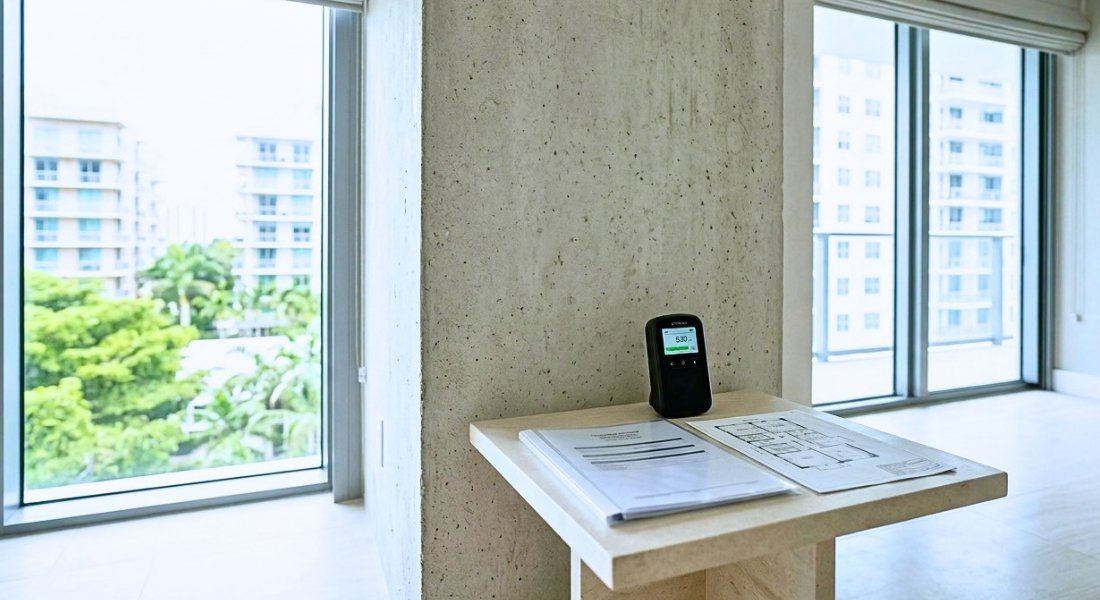
A professional radon test uses a monitoring device placed in an appropriate area of the property. Short-term tests typically run for at least 48 hours, with the device measuring radon concentrations during that period.
Radon levels can fluctuate because of changes in ventilation, temperature, pressure, and other conditions. A short-term test provides a snapshot of radon levels during the testing period.
The EPA recommends taking action when the average annual radon level is 4 picocuries per liter (pCi/L) or higher. If a short-term test shows 4 pCi/L or more, EPA recommends conducting a follow-up test before making a mitigation decision.
For a condominium, the dynamics can differ from those of a single-family home. In homes with elevated radon, sub-slab mitigation systems can reduce radon entering through the foundation. If building materials are contributing to elevated levels in a high-rise, the appropriate response depends on the source and building design.
That uncertainty is part of what has made the Mr. C Residences situation difficult to resolve. For buyers considering a new construction condo in Miami, radon testing can provide useful information during due diligence.
If you are working through the due diligence checklist for a Miami condo purchase, reach out to Debra Wellins before you complete your inspections. A conversation can help clarify what to request and when.
Testing Before the Deal Gets Underway
For sellers, testing before listing provides more information about a potential issue. If levels are elevated, there is time to investigate the results and consider next steps before a buyer raises the issue during negotiations or inspections.
Florida sellers generally have a duty to disclose known material facts that materially affect a property’s value and are not readily observable to a buyer. That duty comes primarily from Florida case law, including the Florida Supreme Court’s decision in Johnson v. Davis. Sellers who discover elevated radon levels should seek legal advice about their specific disclosure obligations.
For buyers considering a new construction condo in Miami, radon testing can provide additional information during due diligence. The importance of testing may be greater when there are questions about a building’s materials or prior radon results.
A recent client who relocated to Palmetto Bay made low radon levels a primary condition of her rental decision.
“She requested the landlord perform a radon test. Levels were quite low, within the acceptable range, so she moved forward with the lease.
I encourage all buyers and sellers to test. Better to know in advance of listing so that remediation can be implemented, if necessary. Buyers are going to test. Elevated levels will hinder or cause cancellation of a sale.”
— Debra Wellins, Luxury Real Estate Advisor, Berkshire Hathaway HomeServices EWM Realty
An Elevated Reading Is Not the End of the Deal
An elevated radon result does not automatically end a transaction. Elevated radon levels in a house can often be addressed through established mitigation methods. Mitigation professionals certified through the National Radon Proficiency Program (NRPP) can assess the situation and recommend appropriate next steps. Condo buildings can present different challenges, depending on the source and building design.
If radon comes back elevated during inspection, the finding can open a negotiation rather than end the transaction. A buyer can request remediation, a price adjustment, or time to investigate further. A seller with clean test results has documentation that supports the transaction. Either way, having the information early keeps both parties in a position to act rather than react.
Radon FAQs for Miami Buyers and Sellers
Is radon testing now required for Miami condo purchases?
Testing is not generally required for a standard Miami condo purchase. Buyers can include radon testing as part of their due diligence. It may be especially useful when purchasing new construction or when questions arise about building materials or prior radon results. An elevated result can then become part of the inspection findings and negotiation.
What radon level should concern Miami condo buyers?
The EPA recommends taking action when the average annual radon level is 4 picocuries per liter (pCi/L) or higher. If a short-term test shows 4 pCi/L or more, EPA recommends follow-up testing before making a mitigation decision. There is no known safe level of radon exposure, so a lower reading does not mean there is zero risk.
Can radon come from a building’s concrete rather than the soil?
Yes. EPA recognizes that some building materials can contain naturally occurring radioactive materials that produce radon as they decay. Materials used in concrete can contribute to indoor radon levels in some circumstances, although EPA says building materials rarely cause radon problems by themselves. The reported situation at Mr. C Residences has raised questions about whether building materials contributed to elevated levels there. Testing is needed to determine whether a particular building has elevated radon and what may be contributing to it.
How does radon in Miami condos compare to single-family homes?
In single-family homes, radon commonly enters from the soil beneath or around the foundation and can accumulate indoors. Sub-slab mitigation is an established approach when soil is the source. In a high-rise, the situation can be different if building materials are contributing to elevated levels. The appropriate response depends on the source and building design, which is why testing and professional evaluation are important when elevated levels are detected.
How much does a radon test cost in Miami, and who pays for it?
The cost of a professional radon test varies by provider, property, testing method, and duration, so buyers and sellers should obtain a quote before testing. In a purchase transaction, the parties can determine who will arrange and pay for the test as part of the inspection process. Sellers who test before listing can have the results available before negotiations begin, while buyers can request testing as part of their due diligence.
Do Florida sellers have to disclose radon findings?
Florida residential sellers generally must disclose known material facts that affect a property’s value and are not readily observable to the buyer. That duty comes primarily from Florida case law, including the Florida Supreme Court’s decision in Johnson v. Davis. Sellers who discover elevated radon levels should seek legal advice about their specific disclosure obligations.
If radon comes back elevated in a condo, what are the options?
The appropriate response depends on the source of the radon and the building’s design. In single-family homes, sub-slab mitigation systems can reduce radon entering through the foundation. If building materials are contributing to elevated levels in a high-rise, the options may differ. Buyers should consult a qualified radon professional about the results and discuss any inspection or negotiation implications with their real estate and legal advisers. An elevated result does not automatically end a transaction, but it can affect the negotiation.
Should a seller test for radon before listing, or wait for the buyer to request it?
Testing before listing can give sellers more time to understand the property’s radon levels and investigate options if the result is elevated. It also gives sellers documentation they can consider when preparing for buyer questions. Waiting until the buyer requests testing can mean addressing the issue later in the transaction, when there may be less time to investigate the results. The broader case for proactive due diligence is covered in Miami Condo Sellers Who Know Their Inspection Status Win More Deals.
Know What You’re Facing Before Moving Forward
Radon does not have to derail a Miami real estate transaction. Testing early gives buyers and sellers more information and more time to respond if radon levels are elevated. If you are preparing to sell a home or considering a condo purchase in Miami, radon testing can be one consideration during due diligence.
Connect with Debra Wellins to discuss what radon testing could mean for your property or purchase and what questions to ask before you move forward.