Florida Condo Buyers Must Review These Documents Before Closing
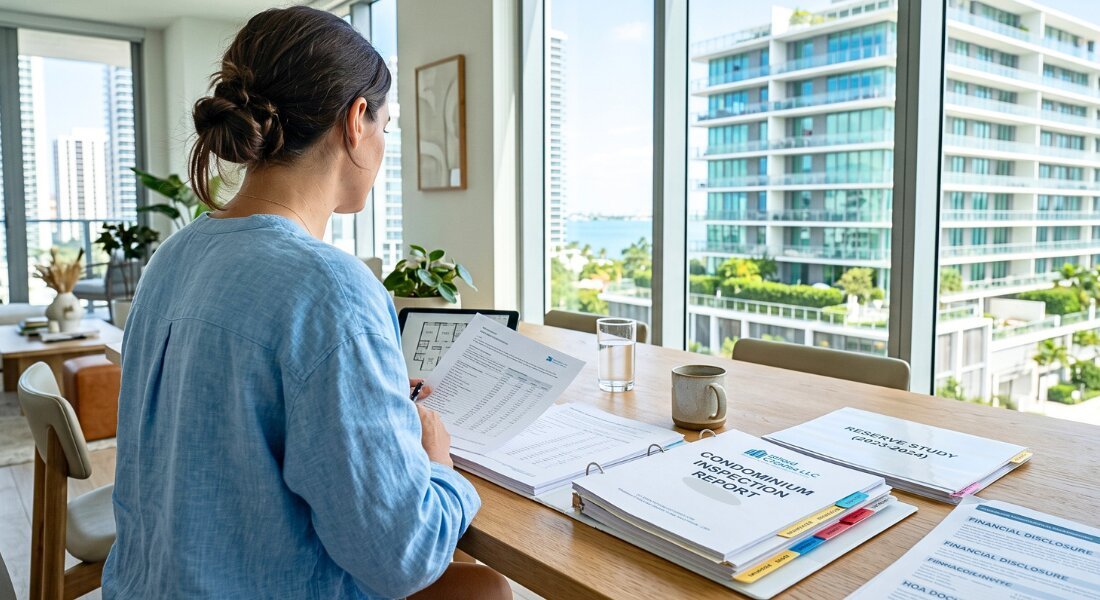
Florida condo due diligence is no longer a checkbox exercise. The Surfside collapse and the legislation that followed have made structural inspections, reserve funding, and association records more important to buyers. Inspection timelines, reserve requirements, special assessments, and other association obligations can directly affect whether a condo is financially sound. If you’re buying a Miami condo, understanding Florida condo due diligence can help you avoid costly surprises after closing.
Florida law requires qualifying condo associations to complete milestone inspections and structural integrity reserve studies, making these records increasingly important to buyers. Buyers should review available inspection reports, special assessment history, reserve funding, and leasing restrictions before closing. Understanding these records can help identify potential repair costs, assessment increases, and other issues that could affect the purchase after closing.
Understanding the Milestone Inspection Requirement
Florida requires qualifying condominium buildings to undergo milestone structural inspections under Florida Statutes Section 553.899. These inspections formally evaluate the building’s structural integrity. When a seller provides a completed milestone inspection report alongside a current structural integrity reserve study, the entire conversation shifts. Buyers can move beyond speculation about what a building might be hiding. They have a documented picture of what inspectors found and what repairs may be needed.
Not every building has reached this point. Some are still under inspection, while others have identified repairs that need to be scheduled or funded. Understanding exactly where a building stands in this process is one of the first questions a buyer should ask.
The structural integrity reserve study serves a related but distinct purpose. It estimates the funding needed for future repair and replacement of certain major structural and building components. A building that completes its milestone inspection but has inadequate reserves to meet those projected costs is not necessarily in the clear. It may still face significant financial obligations ahead.
Who Pays When the Building Needs Major Repairs?
Major repairs can create another concern for buyers: who pays for the work? Associations may fund significant projects through special assessments, which can add substantial costs for unit owners.
The question of who pays a pending assessment at closing is negotiable, but it requires explicit clarity. Buyers should confirm whether any current or pending special assessments have been paid. They should also confirm how any remaining balance will be handled in the purchase contract and closing documents. Florida law can make a new owner jointly and severally liable for certain unpaid assessments due before title transfer. Buyers who assume an assessment has been resolved without confirming it in writing could face an unexpected expense after closing.
Ask three questions directly:
- Is there a current or pending special assessment?
- Has it been paid?
- If not, who is responsible at closing?
“Buyers interested in purchasing a condo want assurances that inspections were done, repairs completed and special assessments paid off. Sellers must provide the milestone inspection report and structural integrity reserve study if requested by a buyer. These reports, along with board meeting minutes, agendas and all the additional required condo documents, gives a buyer a huge degree of confidence in the soundness of their investment, especially if all the repairs have been done.”
— Debra Wellins, Luxury Real Estate Specialist / Sales Associate
The Critical Association Documents to Examine
Florida law provides condominium purchasers with specific rights to review required condominium documents under Florida Statutes Section 718.503. Use that opportunity to examine the current operating budget, reserve information, recent financial statements, governing documents, rules and regulation and other association records. When applicable, buyers should also review the milestone inspection report, structural integrity reserve study and special assessment records.
Within those documents, three areas deserve particular attention:
- Reserve funding levels. Review the association’s reserve accounts and financial records alongside the structural integrity reserve study. The goal is to determine whether the association can fund known repairs or may need higher assessments or additional charges.
- Leasing restrictions. This matters most for investors, and the details are more complicated than they appear. Some associations prohibit leasing during the first year of ownership. Some cap the percentage of units that can be leased at any one time. Some require board approval for every tenant. Buyers should review the governing documents rather than rely on the seller or listing’s rental claims.
- Pending or approved assessments. Review association records for assessments that have been approved, proposed, or discussed but have not yet been fully collected. These records can reveal future costs that may not be obvious from the current listing price or financial statements.
Other Condo Issues Buyers Should Investigate
Two issues deserve closer attention in today’s Miami condo transactions.
Radon testing. Radon can occur even in newly constructed buildings, so buyers should not assume a newer condo is automatically free of the issue. A positive radon test does not automatically end a deal. It can, however, affect remediation and pricing discussions. Sellers who test proactively can address findings before listing and reduce the likelihood of a late-stage negotiation over remediation.
Core building systems. The age and condition of HVAC, electrical, and plumbing systems also warrant closer scrutiny in buildings from the 1970s through 1990s. These buildings are not automatically problematic. Many have been well maintained and have years of useful life ahead. Buyers should treat these inspections as essential and factor potential repair or replacement costs into the purchase.
What Complete Condo Documentation Tells Buyers
From a buyer’s perspective, one of the clearest signs of a well-run transaction is organized, current, and complete documentation. Providing association records promptly gives buyers reliable information instead of leaving them to make assumptions.
That documentation does not guarantee a perfect building. It can, however, indicate that the seller and association are prepared to meet their obligations and provide buyers with reliable information.
Buildings that cannot produce complete documentation are not automatically disqualified. They simply require closer scrutiny and more questions before the buyer commits to the purchase. The Florida Division of Condominiums, Timeshares, and Mobile Homes provides information on registered condominium associations, complaints, and other regulatory matters. These resources can provide context when building records are incomplete or raise questions.
Evaluating a condo in Coconut Grove, Coral Gables, Brickell, or Key Biscayne? Reach out to Debra Wellins for help reviewing the documents before you write the offer.
Common Questions About Florida Condo Due Diligence
What is a milestone inspection in Florida condos?
A milestone inspection is a structural evaluation required for qualifying condominium buildings under Florida law. It generally applies to condominium buildings that are three habitable stories or more when they reach 30 years of age. However, local authorities can require an inspection at 25 years in certain circumstances. The inspection evaluates the building’s structural condition. It may involve a more detailed phase two inspection if significant structural deterioration is identified. Buyers should request and review any completed milestone inspection report during due diligence.
What is a structural integrity reserve study?
A structural integrity reserve study, or SIRS, estimates the funding needed to repair or replace certain major building components covered by the law. It is distinct from a milestone inspection, which evaluates the building’s structural condition. A building can complete its milestone inspection and still have insufficient reserves to meet future repair and replacement costs.
Who pays a special assessment when a condo is sold?
Responsibility for a special assessment at closing can be negotiated between the buyer and seller. The agreement should be clearly stated in the contract and closing documents. Buyers should confirm whether any current or approved assessment remains unpaid and how it will be handled at closing. Some condos require assessments to be paid in full at closing. Some allow buyers to take over payments. They should also review association records for assessments that have been proposed or discussed but not yet fully collected.
What documents should I request before buying a Florida condo?
Buyers should request the current budget, financial statements, reserve information, governing documents, rules and regulation, inspection reports, and special assessment records, when applicable. Florida Statute 718.503 also provides condominium purchasers with specific rights to review required documents and, in certain circumstances, cancel the contract. Buyers should understand those rights and deadlines before proceeding with the purchase.
Can I rent out a condo I purchase in Miami?
Rental rules vary significantly by building and association. Some buildings prohibit leasing during the first year of ownership. Others limit the percentage of units that can be rented at one time or require board approval for each tenancy. Buyers planning to lease should review the governing documents before closing rather than rely on the seller or listing.
Is radon a concern in Florida condos?
Radon can be a concern in Florida condos, including newer buildings. Testing is not universally required, but buyers can consider radon testing as part of their due diligence. If elevated levels are found, the results can become part of the remediation and pricing discussion before closing. For a Coconut Grove case study, see Radon Gas Discovered at Mr. C Residences Coconut Grove.
Get Expert Eyes on Your Condo Docs
Miami’s condo market rewards buyers who do the work before the offer, not after. Reviewing the building’s records, financial position, inspection history, and leasing rules gives buyers a clearer picture of what they are actually buying.
If you’re considering a condo purchase in Miami, connect with Debra Wellins at BHHS EWM Realty before writing your offer. Understanding the documents before you commit can help you make a more informed purchase and avoid costly surprises.
ABOUT THE AUTHOR
Debra Wellins is a luxury real estate advisor with Berkshire Hathaway HomeServices EWM Realty, specializing in Miami’s sought-after neighborhoods, including Coral Gables, Pinecrest, and Coconut Grove. With more than 15 years of experience and $48 million+ in career sales, she brings a calm, client-first approach to every transaction. She was recognized as the #1 agent in closed transactions in her office in 2023. Debra holds GRI and CLHMS designations and earned a master’s degree from FIU and a bachelor’s degree from Northwestern.