Why Home Staging Pays for Itself in Miami’s Luxury Market

Professional home staging in Miami’s luxury market is one of the highest-return investments a seller can make. A targeted staging investment in a Coral Gables, Coconut Grove or Pinecrest home routinely generates a substantial return in additional sale proceeds. Bypassing this step often leads to unintended costs, including price reductions, extended days on the market, and buyers arriving with leverage rather than competing offers.
Professional home staging in Miami’s luxury market typically costs between $8,000 and $15,000 and generates $50,000 to $100,000 in additional sale proceeds, representing a 525% return on investment. Staged homes sell faster and closer to list price because the first three weeks are critical, after which listings become stale and buyers arrive with negotiating leverage rather than competing offers. In softer markets, staging becomes even more important as presentation distinguishes well-prepared homes from the broader inventory buyers are choosing among.
How the First Three Weeks Dictate Your Sale
Miami’s luxury buyers right now are patient and deliberate. They visit multiple properties, return for second looks, and make careful, data-driven decisions. A home that does not immediately stand out gets quietly filtered out.
The window when your listing is fresh, before it accumulates days on market and before buyers start wondering about potential issues, is brief and unforgiving. Overpriced and underprepared homes do not just sit. They get stale. A stale listing in Coral Gables, Coconut Grove or Pinecrest is a fundamentally different asset than a freshly listed one, even if nothing about the property itself has changed.
Price reductions help, but they carry a cost beyond the dollars. Every reduction signals to the market that a course correction was needed. Buyers who passed the first time do not come back with enthusiasm. They come back with leverage.
Staging solves a problem before it becomes one. That distinction matters enormously when the difference between a fast sale and a stale listing can run six figures. As covered in how the first two weeks shape a home sale, the initial launch period sets the trajectory for everything that follows.
What Does Home Staging Cost in Miami’s Luxury Market?
There is no single number. It depends on the size of the home, the scope of work, and who you hire. But the range is narrower than most sellers expect, and far more manageable than the alternative.
A home priced under $1 million can be meaningfully staged, including the living room, primary bedroom, and family room, for around $4,000. For luxury homes in the $1.5 million to $7 million range, targeted staging of the key spaces typically runs $8,000 to $15,000. Adding outdoor entertaining areas or additional rooms increases the number, but the core investment remains predictable.
Lighting is frequently overlooked and disproportionately impactful. A well-staged room with flat, dim lighting still underperforms. Curated furniture paired with thoughtful lighting transforms listing photos from adequate to compelling. In a market where buyers filter online before ever scheduling a showing, photography is everything. The National Association of Realtors research on home staging consistently shows that staged homes sell faster and spend fewer days on the market than comparable unstaged properties.
What’s the Real Return on Staging and Why Do Sellers Still Resist It?
The math is not subtle. An $8,000 investment that produces $50,000 in additional proceeds is a 525% return. In what other context would a seller pass on that?
The hesitation often stems from emotional attachment. Sellers naturally cherish their homes and may find it difficult to view their personal spaces through the objective lens of the current market. They believe their existing furniture is fine and resist spending money on a house they are leaving.
The pattern I’ve observed across 15 years of Miami luxury transactions is consistent. Sellers who stage early sell faster and for more, up to 15% more. Sellers who stage after a failed launch still benefit, though they start from a weaker position.
That 60-day figure matters. In a balanced market, 60 days on market is not just a delay. It is a negotiating liability. By the time a reluctant seller agrees to stage, buyers who revisit the listing know it was sitting. They arrive ready to negotiate, not ready to compete.
Before you decide whether to stage, it helps to understand how buyers are reading the market right now. See what Miami’s current market shift means for sellers for context on buyer behavior in 2026 and beyond.
The Financial Impact of Professional Staging
I work with sellers across every price point in Miami’s luxury corridor, from waterfront Coral Gables estates to Coconut Grove single-family homes trading north of $2 million.
Sellers are very resistant to spending money. They hear $8,000, but do not connect with the additional $50,000 to $100,000 plus profit they will realize. Staging gives a home a face lift, making it fresh, more contemporized and appealing for today’s buyer. It can also match interior style to architecture, repurpose rooms, and create better flow.It allows buyers to visualize their lifestyle in the home, which is paramount to attracting offers.
Staging can also be blended with a sellers existing furnishings. Unique pieces, accessories, updated window treatments and lighting can be added. Some less desirable items can be removed. For sellers weighing their options, understanding why physical staging still outperforms virtual staging in Miami can help clarify which approach delivers the strongest return.
The sellers who trust that math from the start are the ones who sell in weeks, not months. Sellers who delay staging often face extended days on market and reduced negotiating leverage, which they did not anticipate.
Part of a good advisor’s job is making that conversation comfortable enough to have early, before the market forces it.
Data from the National Association of Realtors’ Profile of Home Staging consistently shows how preparation and presentation choices directly affect a seller’s net proceeds, reinforcing what experienced Miami agents observe in the field.
Not sure whether staging makes sense for your home before you list? Talk to me about your property and price point before you make that call.
Is Staging Worth It Even When the Market Softens?
Staging’s impact does not diminish in a softer market. It amplifies. When buyers have more inventory to choose from, presentation becomes a more decisive factor, not a lesser one. A well-staged home in a slower market separates itself from listings that sit. A poorly presented home in a slower market can sit for months.
The buyers targeting Coral Gables, Coconut Grove, Pinecrest, and Miami’s broader luxury corridor have seen a lot of property. They have high expectations. They have difficulty looking past dated furniture, poor lighting, or a home that feels cluttered. They move on to the next listing.
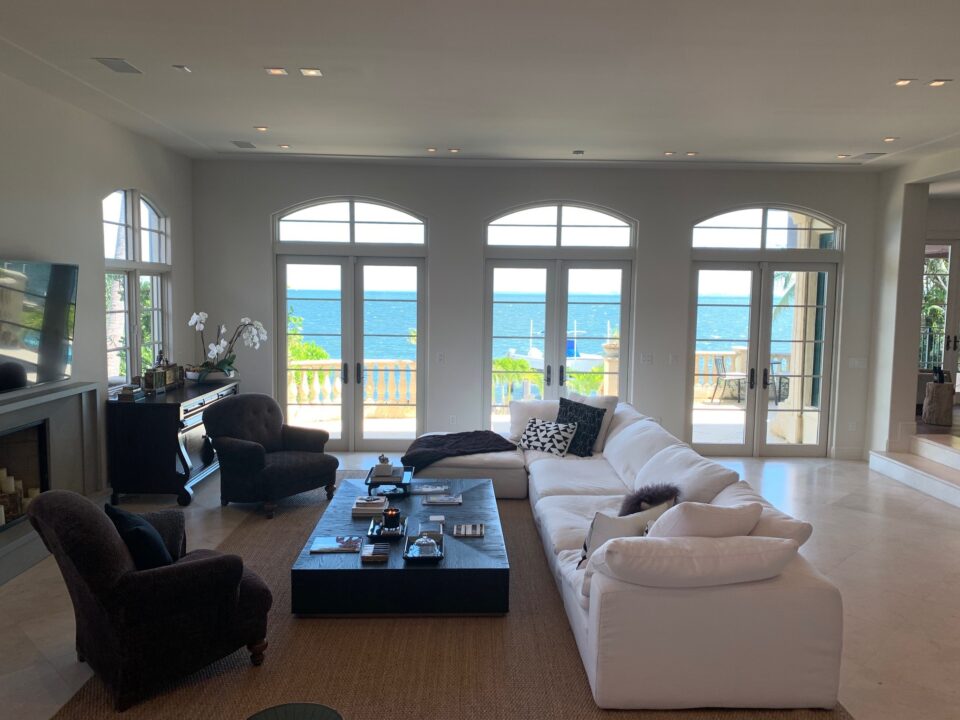
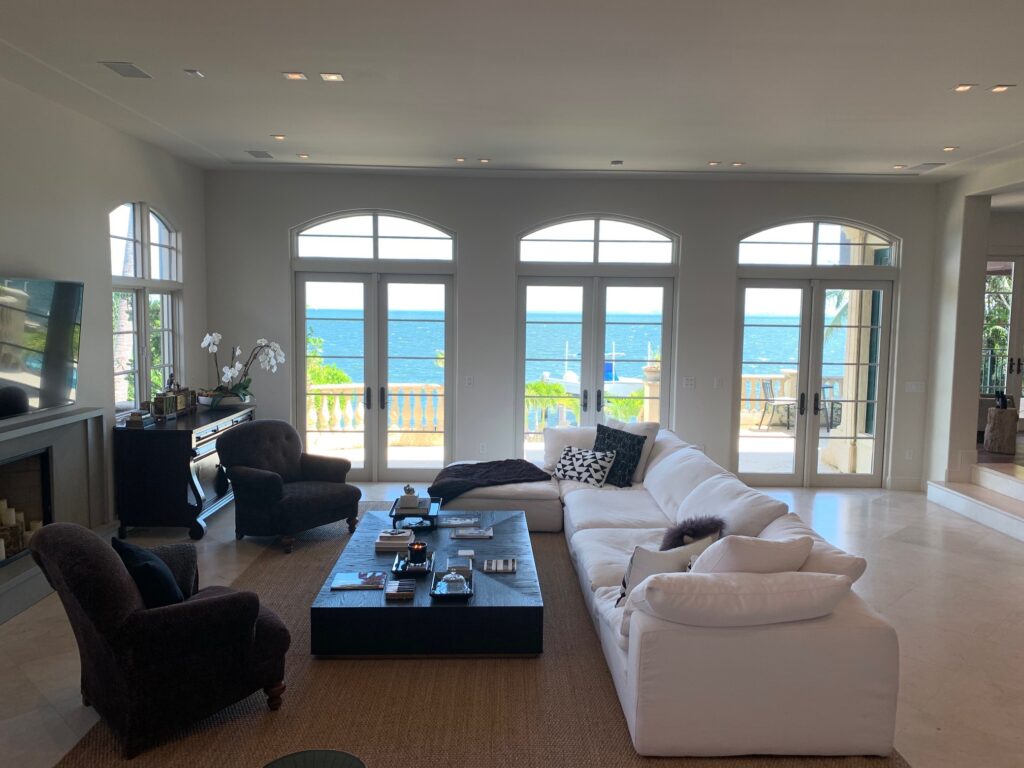
A well-staged home photographs better, shows better, and creates the emotional response that turns interest into offers. In a market where the first few weeks define your outcome, that is not a small thing.
Overpricing compounds the problem. A home that is both overpriced and understaged faces two headwinds simultaneously. The real cost of overpricing a Miami home covers that dynamic in detail – but staging and pricing are decisions that should be made together, not in sequence. The HUD guidelines on home sale preparation also note that presentation and accurate pricing work together to maximize seller outcomes.
Frequently Asked Questions
How much does home staging cost in Miami’s luxury market?
Most luxury homes in Miami stage for between $8,000 and $15,000, covering the primary living spaces, primary bedroom, and key entertaining areas. Smaller homes or partial staging runs lower, often around $4,000 for targeted rooms. Outdoor areas and additional spaces increase the total, but the core investment is predictable before you commit.
Does home staging actually help homes sell for more?
Staged homes consistently sell faster and closer to the list price than unstaged homes. In Miami’s luxury market, sellers routinely recover $50,000 to $100,000 more in sale proceeds from an $8,000 to $15,000 staging investment. The return depends on price point, market timing, and quality of execution, but the directional impact is well documented across Miami’s luxury neighborhoods.
What happens if I list my Miami home without staging first?
Unstaged homes that fail to sell within the first two to three weeks begin to accumulate days on market, which buyers and their agents track closely. Once a listing goes stale, price reductions become necessary, and each reduction signals to the market that the home has a problem. Buyers re-engage from a position of leverage rather than competition.
Which rooms matter most for luxury home staging in Miami?
The living room, primary bedroom, and main entertaining area carry the most weight in buyers’ perceptions and in listing photography. Outdoor living spaces matter significantly in Miami, given the climate and lifestyle expectations of luxury buyers. Kitchens and bathrooms benefit from decluttering, accesorizing and lighting upgrades, even when furniture staging isn’t involved.
Does staging matter for online listings and photography?
Yes. The majority of luxury buyers pre-filter properties online before scheduling a showing. Staging directly improves the quality of listing photography, which determines whether a buyer visits at all. A well-staged, well-lit room photographs dramatically better than an occupied room with dated existing furniture, regardless of how nice the furniture actually is.
How long does home staging take in Miami?
Most professional staging projects take one to three days once furniture and accessories are sourced. Lead times for stagers in Miami’s luxury market vary by season and demand, so sellers should plan staging two to three weeks before their target list date to avoid delays.
Should I stage if my home is already vacant?
Vacant homes often need staging more than occupied ones. Empty rooms photograph poorly, feel smaller than they are, and give buyers no frame of reference for how space functions. A vacant luxury home without staging leaves money on the table because buyers struggle to connect emotionally with a property that shows no sense of how it lives.
Can staging help a listing that’s already been sitting on the market?
Yes, though the starting position is weaker than staging before launch. Refreshing a stale listing with professional staging, updated photography, and sometimes a modest price adjustment can re-engage buyers who passed the first time. The key is acting quickly. The longer a listing sits, the harder the reset becomes.
Ready to Position Your Home the Right Way From Day One?
If you are preparing to list a luxury home in Coral Gables, Coconut Grove, Pinecrest, or anywhere along Miami’s competitive luxury corridor, staging is not optional. It is a foundational part of your market strategy that directly affects how quickly you sell and how much you walk away with.
The first conversation is free, and it may save you far more than the cost of staging ever would. Contact Debra Wellins at BHHS EWM Realty for an honest assessment of your home and a clear-eyed plan for getting it to market the right way.
I’m a Luxury Real Estate Advisor with Berkshire Hathaway HomeServices EWM Realty, specializing in Miami’s most sought-after neighborhoods including Coral Gables, Pinecrest, and Coconut Grove. With over 15 years of experience, $48M+ in sales, and recognition as the #1 agent in closings my office in 2023, I bring a calm, client-first advisory approach backed by a Master’s from FIU and an undergraduate degree from Northwestern University. I’m a Certified real Estate Negotiator and hold GRI and CLHMS designations.
ABOUT THE AUTHOR
Debra Wellins is a luxury real estate advisor with Berkshire Hathaway HomeServices EWM Realty, specializing in Miami’s most sought-after neighborhoods including Coral Gables, Pinecrest, and Coconut Grove. With over 15 years of experience, $32M+ in sales, and recognition as the #1 agent in her office in 2023, she brings a calm, client-first advisory approach backed by a Master’s from FIU and a Bachelor’s from Northwestern. She holds GRI and CLHMS designations.