New Condo Amenities vs Older Buildings in Miami: What You’re Actually Paying For
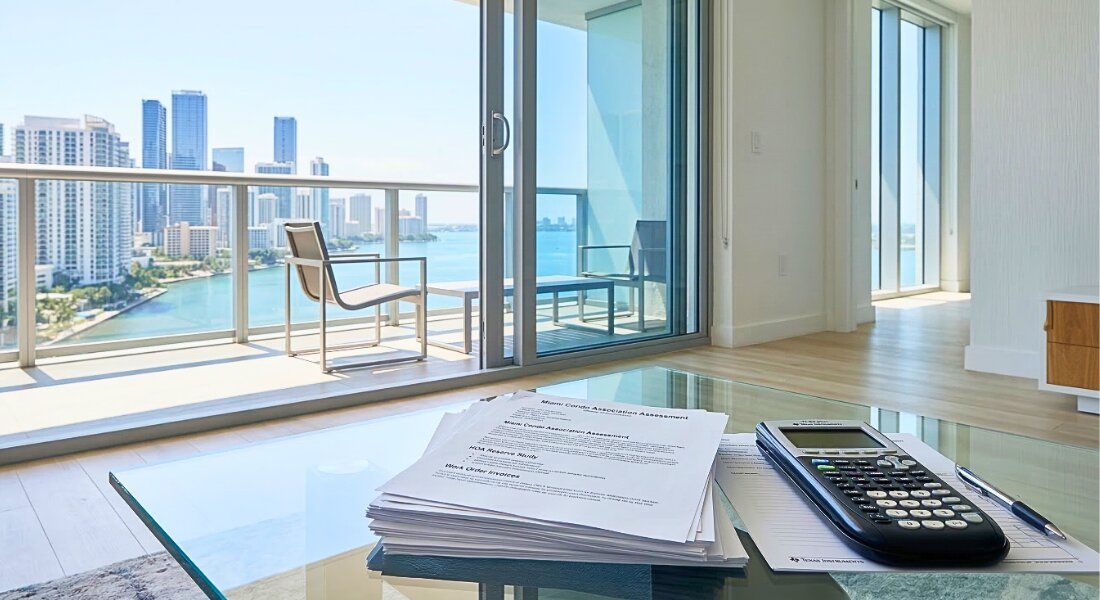
Miami’s new condo towers sell a lifestyle. A crucial question buyers must ask themselves before closing is whether that lifestyle aligns with their daily routine. For buyers comparing new luxury condos to older buildings in Coral Gables, Coconut Grove, or Brickell, the financial gap is real, the square footage trade-off is significant, and the right answer depends entirely on how you actually live. This guide breaks down what you are buying, what you are giving up, and what the numbers look like before you sign.
New luxury condos in Miami typically charge $2,000 or more monthly in HOA fees for full-amenity buildings, while often offering smaller unit sizes than comparable older buildings in Coral Gables or Coconut Grove. Buyers should evaluate whether they will genuinely use amenities like pools, golf simulators, and concierge services, since these spaces add permanent carrying costs regardless of actual usage. Older buildings offer more square footage at potentially lower monthly fees, but require careful review of structural reserve studies and the possibility of future special assessments under Florida’s post-Surfside reserve legislation.
What Do Miami Condo Fees Actually Cover in a Full-Amenity Building?
New luxury condo HOA fees in Miami typically run $2,000 or more per month in a full-amenity building, and that figure arrives before insurance, property taxes or mortgage payments. The fee covers operational costs, building insurance, amenity maintenance, staffing, and reserve fund contributions. Every square foot of that rooftop terrace, every piece of fitness equipment, and every hour the concierge sits at the front desk represents a cost you are paying for month after month, whether you use the services or not. These amenities are a permanent part of your carrying costs.
Older buildings tell a different story on fees, though the gap has narrowed. Florida’s condominium reserve legislation, passed in the wake of the Surfside collapse, now requires associations to maintain fully funded reserves for major structural components. Older buildings are absorbing those costs. Even so, the monthly difference between a well-run older building and a new full-amenity tower often remains meaningful. In a market where carrying costs compound across years of ownership, it matters.
The Space Trade-Off: Balancing Unit Size with Building Amenities
An important trade-off to note beyond the beautiful renderings is that new condo units are often smaller. Closets can be more compact, and while open floor plans sound appealing, they are sometimes a response to tighter square footage. The expansive amenity decks effectively utilize space that might otherwise belong to individual units.
Older buildings in Coconut Grove and Coral Gables were constructed when developers allocated more generously to the units themselves. The amenity offerings were simpler, often just a pool or perhaps a gym, but the square footage stayed inside your apartment. You received more living space within your own walls, and that extra room often matters more day-to-day than a media room three floors down.
For buyers relocating from cities like New York or Chicago, this comparison tends to land hard. A unit marketed as spacious in a new Brickell tower may measure notably smaller than a comparable older unit in Coconut Grove at a similar price point. Reading our neighborhood-by-neighborhood comparison of Coconut Grove and Coral Gables before you start touring helps frame that contrast clearly.
Evaluating the Real Value of Luxury Amenity Packages
I raise the amenity question with nearly every condo client. My goal is not to steer them away from new construction, but to make sure they are buying the right property for how they actually live.
Are you going to go actually sit at the bar at the pool and hang out there all the time? Are you going to go to the conference rooms or the media rooms? Most people hardly use them after the first two months. It’s just like buying a house with a pool. How many people actually swim in their pool? Ask yourself if this something you’re really going to use.
Spaces like putting greens, golf simulators, or even secondary pools, photograph beautifully, but they add a premium to your monthly costs for as long as you own the unit. If those spaces will genuinely enhance your daily life, the investment makes sense. Understanding the amenity features that matter most to today’s luxury buyers can help you separate the offerings that hold long-term value from those that simply photograph well. If you are primarily drawn to the imagery in a marketing brochure, it is worth pausing before you sign.
What Makes Older Coral Gables, Coconut Grove and Brickell Condos Worth a Serious Look?
Choosing an older building in a well-maintained Coral Gables, Coconut Grove or Brickell complex can be an excellent decision. For buyers who value space over extensive amenities, who entertain at home rather than at a rooftop bar, and who want a living room that can easily hold large furniture, older inventory often wins on the fundamentals.
The due diligence, however, is more involved. Under Florida’s Condominium Act, buildings thirty years old or older (or twenty-five years if within three miles of the coast) must complete a milestone structural inspection and a structural integrity reserve study (SIRS). As a buyer, you want to review those documents before you make an offer.
Special assessments remain a real possibility in buildings that carried underfunded reserves for years before the legislation forced the issue. While your baseline monthly cost may be lower than that of a new tower, the potential for future assessments differs, and you need to account for that in your planning.
Not sure how to read a condo’s reserve study or evaluate whether a pending assessment is a red flag or a manageable line item? Talk through the specifics with me before you go under contract.
Condo fees can be really high in a new condo; they are going to be in excess of a couple thousand dollars a month. In older condos, maybe it’s $1,000 a month plus any special assessment, which adds an additional $1,000 plus. Old vs new…it all depends on needs and preference. More square footage with functional lobbies and gyms vs smaller units with upscale contemporary fitness spas and common areas.
How Miami’s Post-Surfside Reserve Laws Changed the Condo Calculus
The Surfside collapse in 2021 reshaped condo ownership in Florida in ways buyers are still navigating. The structural integrity reserve study requirement is mandatory, and the associated costs are now factored into HOA budgets statewide. For buyers of older buildings, that means monthly fees that were comfortably low a few years ago may already have risen, or are scheduled to rise as associations catch up to the new funding thresholds.
A well-funded association typically maintains reserves at 70% or more of the recommended threshold identified in its reserve study. Anything significantly below that number warrants a conversation with your agent and, potentially, your attorney before you proceed. Fannie Mae’s strict post-Surfside condo-project standards are a useful reference for understanding how reserve shortfalls and deferred maintenance can directly block mortgage approvals for older buildings.
For a deeper look at how insurance intersects with financing in Miami’s condo market, the article on what happens when a property can’t be insured walks through the real-world implications for buyers.
How Do You Decide Which Type of Building Fits Your Life?
The new-versus-older question does not have a universal answer. It has your personal answer, based on how you actually live.
Young children who will genuinely use a pool deck and play areas change the calculus. A corporate executive relocating from New York who travels forty weeks a year may find real practical value in a concierge building’s services and security profile. A downsizer looking to simplify may be well matched to a smaller unit in a well-run, newer property where maintenance responsibility ends at the front door.
But if the primary draw is lifestyle imagery like the cigar lounge, the wine room, or the sports courts, it is important to stop and ask whether those spaces will still feel exciting in six months. Consider the balance between the square footage and monthly carrying costs required to access them. Ask whether the unit itself, stripped of the amenity offerings, is the right home for your life.
Miami’s condo market rewards buyers who look past the presentation and ask the harder questions. For relocating buyers, especially, understanding why the sticker price alone rarely tells you what a purchase will actually cost month to month is worth reading in full. Our piece on the price shock buyers feel entering Miami’s market addresses exactly that.
Frequently Asked Questions
What are typical HOA fees for new luxury condos in Miami?
New luxury condo buildings in Miami typically carry HOA fees of $2,000 or more per month, with some full-amenity towers running considerably higher. These fees cover operational costs, building insurance, amenity maintenance, and reserve contributions. Buyers should request the association’s most recent financial statements and reserve study before making an offer to understand what is actually driving the number.
Are older condos in Miami cheaper to own than new construction?
Generally, yes, though the gap has narrowed since Florida’s post-Surfside reserve legislation took effect. Older buildings often have lower baseline HOA fees, but buyers need to carefully evaluate the association’s reserve funding status. A building with underfunded reserves may levy special assessments that significantly increase the true monthly cost of ownership.
What is a structural integrity reserve study, and why does it matter?
Florida law now requires condominium buildings thirty years old or older(twenty-five years if within three miles of the coast) to complete a milestone structural inspection and a structural integrity reserve study (SIRS). The reserve study establishes how much the association must set aside annually to cover major structural repairs. Buyers of older condos should review this document before purchase, as it directly affects future HOA fees and the risk of special assessments.
Do Miami condo amenities affect resale value?
Amenities can support resale value in buildings where the target buyer pool genuinely values them, particularly in Brickell and Downtown Miami, where urban lifestyle buyers expect full-service buildings. In more residential neighborhoods like Coral Gables and Coconut Grove, spacious units and lower carrying costs often carry more weight with resale buyers than an extensive amenity deck.
What should I look for in a condo’s financials before buying?
Review the association’s budget, reserve fund balance, reserve study, meeting minutes from the past two years, and any pending or recently completed special assessments. Pay particular attention to the reserve funding percentage. A well-funded association typically maintains reserves at 70% or more of the recommended threshold. Underfunded reserves signal future assessment risk.
Is new construction or an older building better for a corporate relocation to Miami?
It depends on how you plan to use the unit. Corporate relocators who travel frequently often value the security, concierge services, and low-maintenance ownership profile of new construction. Those planning to spend significant time in Miami and who prioritize space for working from home or entertaining typically find that older buildings in Coral Gables or Coconut Grove offer better value per square foot.
What neighborhoods in Miami have the best older condo inventory?
Coconut Grove and Coral Gables carry some of Miami’s most appealing older condo stock, offering well-built units with generous square footage, tree-lined surroundings, and lower density than the newer towers. Key Biscayne also has a substantial older condo market with island lifestyle appeal. Buyers willing to do thorough financial due diligence on the association often find strong value in these submarkets.
How do I evaluate whether an amenity package is worth the premium?
Start with an honest inventory of your daily habits rather than your aspirational ones. Calculate the monthly cost premium between the full-amenity building and a comparable older property, then ask whether the amenities you would actually use justify that difference over five years of ownership. Also, consider walkability. For most buyers, the answer narrows the list considerably.
Ready to Cut Through the Amenity Pitch and Find the Right Building?
Miami’s condo market is large, layered, and full of variables beyond the initial marketing materials. Reserve funding status, pending assessments, unit-to-amenity square footage ratios, and neighborhood-specific resale dynamics all shape whether a specific building is the right fit, and much of this detailed information is not found in a standard developer’s presentation.
If you are evaluating new luxury condos or older buildings in Coral Gables, Coconut Grove, Brickell, or Key Biscayne and want an honest read on what a specific building’s financials and carrying costs actually mean for your purchase, let’s start the conversation before you go under contract. These are exactly the questions worth asking while you still have options.
I’m a Luxury Real Estate Advisor with Berkshire Hathaway HomeServices EWM Realty, specializing in Miami’s most sought-after neighborhoods including Coral Gables, Pinecrest, Coconut Grove and Brickell. With over 15 years of experience, $48M+ in sales, and recognition as the #1 agent in closings in my office in 2023, I bring a calm, client-first advisory approach backed by a Master’s from FIU and an undergraduate degree from Northwestern University. I hold GRI and CLHMS designations.
ABOUT THE AUTHOR
Debra Wellins is a luxury real estate advisor with Berkshire Hathaway HomeServices EWM Realty, specializing in Miami’s most sought-after neighborhoods including Coral Gables, Pinecrest, and Coconut Grove. With over 15 years of experience, $48M+ in sales, and recognition as the #1 closing agent in her office in 2023, she brings a calm, client-first advisory approach backed by a Master’s from FIU and a Bachelor’s from Northwestern. She holds GRI and CLHMS designations.