How Financed Buyers Can Win Against Cash Offers in Miami’s Luxury Market
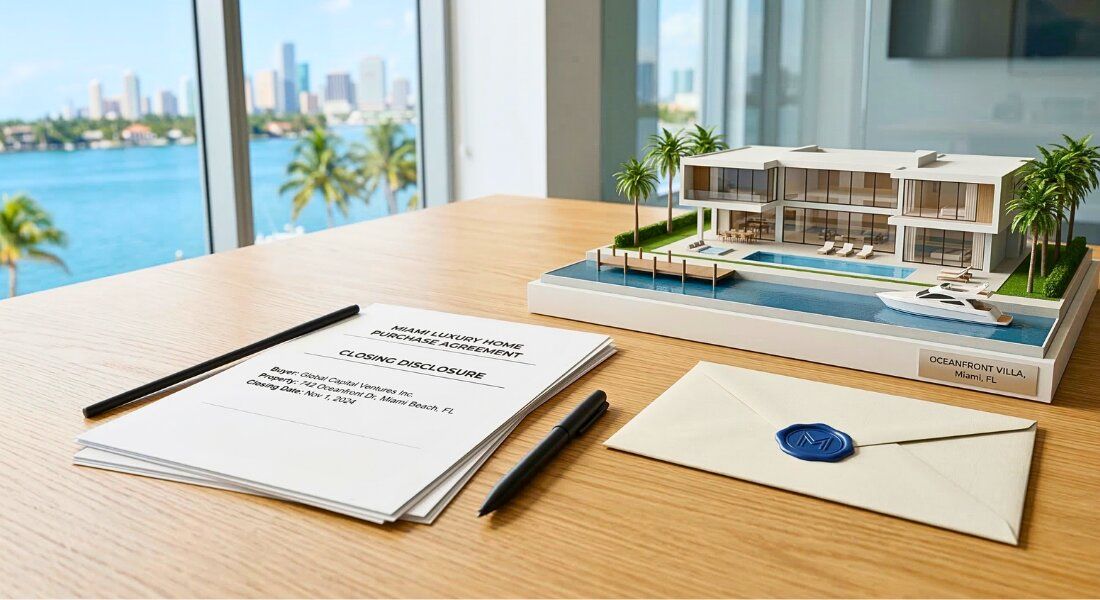
Roughly 67% of luxury home transactions in Miami priced above $1 million close without a mortgage. That number stops a lot of financed buyers cold, but it shouldn’t stop them from competing. Winning a luxury home purchase in Miami with financing comes down to preparation, offer structure, and understanding what the seller actually needs before a number goes on paper. Financed buyers who get those three things right compete effectively, sometimes against cash bids.
Financed buyers competing in Miami’s luxury real estate market above $1 million can outperform cash offers by securing a desk underwriter pre-approval and learning the seller’s actual priorities before submitting an offer. Terms like flexible closing dates and leaseback provisions often matter more to sellers than price alone, allowing financed buyers to structure competitive offers that address specific needs. Understanding the local market dynamics in neighborhoods like Coral Gables, Coconut Grove, and Pinecrest, combined with thorough due diligence on insurance and HOA costs, gives financed buyers a structural advantage over cash buyers who may skip these steps.
The One Phone Call to Make Before Writing an Offer
The single most important step in structuring a competitive offer is a direct conversation with the listing agent, not to find out what the seller will take, but rather to find out what would make an offer genuinely attractive to them.
Every seller has unique priorities, whether it involves their moving timeline or concerns about deal certainty. These priorities change how you structure the offer, and none of them have anything to do with price.
Most buyers assume the highest number wins. In a market with patient sellers, limited inventory, and plenty of cash on the sidelines, that assumption fails more often than realized. A financed buyer who addresses a seller’s real priorities will consistently outperform a higher cash offer that ignores them. Terms matter. Flexibility matters. Knowing what the seller actually needs is the foundation upon which everything else is built.
Why a Standard Pre-Approval Falls Short in Miami’s Luxury Tier
A standard pre-qualification letter is baseline in most markets. In Miami’s luxury tier, even a buyer pre-approval letter barely registers. Sellers don’t appreciate that there’s even a difference between these two letters. Sellers at this price level have watched deals collapse on financing contingencies and lenders who couldn’t close on schedule. A lenders standard automated letter, based on a buyer’s income and debts, often lacks the scrutiny and verification needed to provide sellers with true peace of mind.
What changes the conversation is a desk underwriter’s pre-approval.
When a file reaches desk underwriting, an actual underwriter has reviewed the full picture rather than an algorithm running credit and income through a scoring model. They’ve reviewed tax returns and credit card debt, and verify employment. This distinction matters to sellers and their agents. It signals that the financing risk is substantially lower, that the buyer’s file has real scrutiny behind it, and that, in terms of deal certainty, this offer is meaningfully closer to cash than a standard pre-approval suggests. The CFPB’s mortgage underwriting guidelines outline why lender review depth affects loan certainty, and sellers’ agents in this market understand that distinction well.
In a competitive multiple-offer situation, showing up with the right approval structure is often the difference between getting to the table or losing the contract.
How to Structure Appealing Financing
With desk underwritten approval in hand and a clear read on the seller’s priorities, a financed buyer has real tools to work with. The strategy is combining them into an offer that feels low-risk and genuinely flexible.
Debra Wellins has spent more than 15 years advising buyers across Coral Gables, Coconut Grove, and Pinecrest through some of the most competitive conditions in South Florida’s luxury market. Her focus is on learning what a seller needs before putting a number on paper and then building the offer to match.
“I always start by asking the listing agent what makes an offer appealing to their seller. Do they want a fast close? Do they want to lease back for a month or two so they can stay in the house? The things that sweeten the deal for the seller are what help a financed buyer be competitive. I make sure my clients get a desk underwriter pre-approval so they’re strongly competitive.”
– Debra Wellins, Luxury Real Estate Advisor
A leaseback provision costs a buyer almost nothing in the early weeks of ownership. To a seller who needs time to transition, it can be worth more than a higher competing offer. A flexible closing date can matter more than price to someone coordinating a move. These terms close the gap between financed and cash, and they are almost always available to a buyer willing to ask the right questions first.
Preparing to buy in Coral Gables, Coconut Grove, or Pinecrest, and not sure how to structure your offer? Reach out to Debra Wellins before you find the house. This is the conversation that makes the difference when the right property appears.
The Due Diligence Advantage Financed Buyers Hold Over Cash
Interestingly, in Miami’s cash-heavy market, buyers who do not carry a mortgage sometimes bypass the thorough due diligence a lender would require. Insurance costs, HOA fees, pending special assessments, and flood zone designations don’t disappear because a mortgage is not involved; they just surface later, sometimes at a high cost.
Financed buyers enter the process with more built-in discipline. That structure, paired with the right advisory support, becomes a genuine advantage.
Before any client makes an offer on a property, a good agent gathers the seller’s current insurance carrier information, running preliminary insurability estimates based on roof age and construction type, and flagging anything that could become a negotiating point or a closing complication. South Florida’s insurance market has shifted significantly in recent years, and Citizens Property Insurance Corporation, Florida’s state-backed insurer of last resort, has tightened its eligibility requirements, affecting what buyers can expect to pay. Knowing this before the offer goes in protects the buyer and accelerates the closing timeline in ways sellers notice and appreciate.
For buyers who want to understand how insurance eligibility can affect a purchase before closing, the breakdown on what happens when you can’t insure a Miami home is worth reading carefully.
What the Numbers Look Like in the $1.5M to $3M Range in Coral Gables, Coconut Grove and Pinecrest
For buyers financing in the $2 million to $5 million range in Coral Gables or the surrounding neighborhoods, the interest rate matters far less than the structure of the offer. Loan-to-value ratio (LTV) and debt-to-income ratio (DTI) are the two metrics lenders care most about at this price level, and both are reviewable before the offer goes in, not after. Buyers who delay their search waiting for rates to drop often discover why waiting for lower rates often costs more than the rates themselves.
Coral Gables, Coconut Grove and Pinecrest sit at meaningfully different price-per-square-foot levels despite their proximity, and buyers who treat them as interchangeable will overpay in one and miss opportunities in the other. Coral Gables carries premium pricing for its historic architecture, Mediterranean Revival character, resale stability and lifestyle. Coconut Grove is more forested with a variety of architecture, a melting pot of different cultures and very walkable. Pinecrest trades on large lots, top-rated public schools, privacy, and little commercial zoning. The appreciation dynamics and total cost of ownership differ between the two in ways that only become clear with street-level market knowledge.
For a deeper look at how Pinecrest’s single-family market has performed, the Pinecrest Home Sales 2025 Annual Review lays out the data worth knowing before you start your search.
Proven Strategies to Compete Against Cash Offers
The checklist is short. Secure an approval with real underwriting behind it. Find out what the seller needs before any number goes on paper. Position the transaction to feel as certain and low-friction as possible.
Cash is the default preference in this market. But a well-structured, financed offer, backed by the right preparation and the right agent, wins more often than the headline statistics suggest. The buyers who struggle in this market often lead solely with price and show up with a standard pre-approval. Those who succeed have already had the conversation that other buyers skipped.
If you’re weighing whether to compete now or wait for different conditions, read Miami Market Shifts in Favor of Buyers for context on where the market stands for financed buyers right now.
Frequently Asked Questions
Can a financed buyer realistically compete with cash offers in Miami’s luxury market?
Yes. Cash offers carry a natural advantage in Miami’s luxury tier, but financing alone does not disqualify a buyer. Sellers care about certainty, timeline, and flexibility, not just the payment method. A financed buyer with a desk underwriter pre-approval and an offer structured around the seller’s actual priorities will compete effectively, sometimes against higher cash bids.
What is a desk underwriter pre-approval, and why does it matter for a luxury home purchase in Miami?
A desk underwriter pre-approval means an actual underwriter has reviewed the buyer’s complete file before an offer is submitted, rather than just a loan officer running numbers through automated software. This level of review signals to sellers that the financing is thoroughly vetted and that the risk of a financing failure is substantially lower than a standard pre-approval.
What is a leaseback provision, and when should a buyer offer one?
A leaseback allows the seller to remain in the home for an agreed period after closing, typically 30 to 60 days, while paying the buyer a daily rate. It costs the buyer very little in the early weeks of ownership and can be a decisive factor for sellers who need time to coordinate their next move. In competitive situations, offering a leaseback often matters more than raising the purchase price.
Why does talking to the listing agent before submitting an offer matter so much?
The listing agent knows what their seller values most, whether that is a fast close, a flexible timeline, certainty of financing, or transition time after closing. An offer built around those priorities lands differently than one structured in a vacuum. Understanding the seller’s situation and motivation before writing the offer is one of the most consistent advantages an experienced buyer’s agent can deliver.
What carrying costs do Miami luxury buyers need to evaluate before making an offer?
Homeowners and windstorm insurance, condo maintenance fees and special assessments and flood zone designations all affect the true cost of ownership. In South Florida, insurance costs have shifted significantly and vary based on roof age, construction type, and location. Buyers should request preliminary insurance estimates and review any pending association assessments before submitting an offer, not after.
How does the luxury market differ between Coral Gables, Coconut Grove, and Pinecrest?
These three neighborhoods serve distinct buyer profiles despite their proximity. Coral Gables is characterized by historic architecture, strict zoning, and walkability near Miracle Mile. Coconut Grove offers a more relaxed village character with bayfront estates and a mix of condos and single-family homes. Pinecrest is a large-lot family market with minimal commercial zoning, top-rated public schools, and more privacy. Price per square foot, schools and lifestyle considerations differ meaningfully across all three.
How long does a financed luxury home purchase in Miami typically take to close?
A well-prepared, financed transaction in Miami’s luxury market typically closes in 30 to 45 days. Buyers who arrive with a desk-underwriter pre-approval and complete documentation can sometimes further compress that timeline. Delays most often trace back to appraisal scheduling, title issues, or lender requests for additional documentation, all of which an experienced advisor can anticipate and address in advance.
What neighborhoods should luxury buyers focus on in Miami?
South Miami and Palmetto Bay offer the strongest value in the $1.5 million to $3 million range for buyers seeking single-family homes with proximity to good schools and neighborhood stability. At higher price points, Coconut Grove appeals to buyers prioritizing waterfront access and walkability. Coral Gables has excellent services, amenities and lifestyle options. Pinecrest is supreme for schools, acre properties and privacy. Each neighborhood has different insurance profiles and appreciation dynamics worth understanding before committing to a search.
Position Your Financed Offer for Success
The strategy for financing a luxury purchase in Miami isn’t complicated, but it requires preparation that is best started early. Secure the right approval before you find the house. Understand the seller’s priorities before you write the offer. Work with an advisor who knows the neighborhoods and can structure an creative and appealing offer that a seller will accept.
If you’re looking in Coral Gables, Coconut Grove, Pinecrest, Palmetto Bay or South Miami, contact Debra Wellins at BHHS EWM Realty to talk through your situation before your search heats up.
ABOUT THE AUTHOR
Debra Wellins is a luxury real estate advisor with Berkshire Hathaway HomeServices EWM Realty, specializing in Miami’s most sought-after neighborhoods including Coral Gables, Pinecrest, and Coconut Grove. With over 15 years of experience, $48M+ in sales, and recognition as the #1 closing agent in her office in 2023, she brings a calm, client-first advisory approach backed by a Master’s from FIU and an undergraduate degree from Northwestern. She holds GRI and CLHMS designations.