Waiting for Lower Mortgage Rates? That May Cost You More Than the Rates Themselves
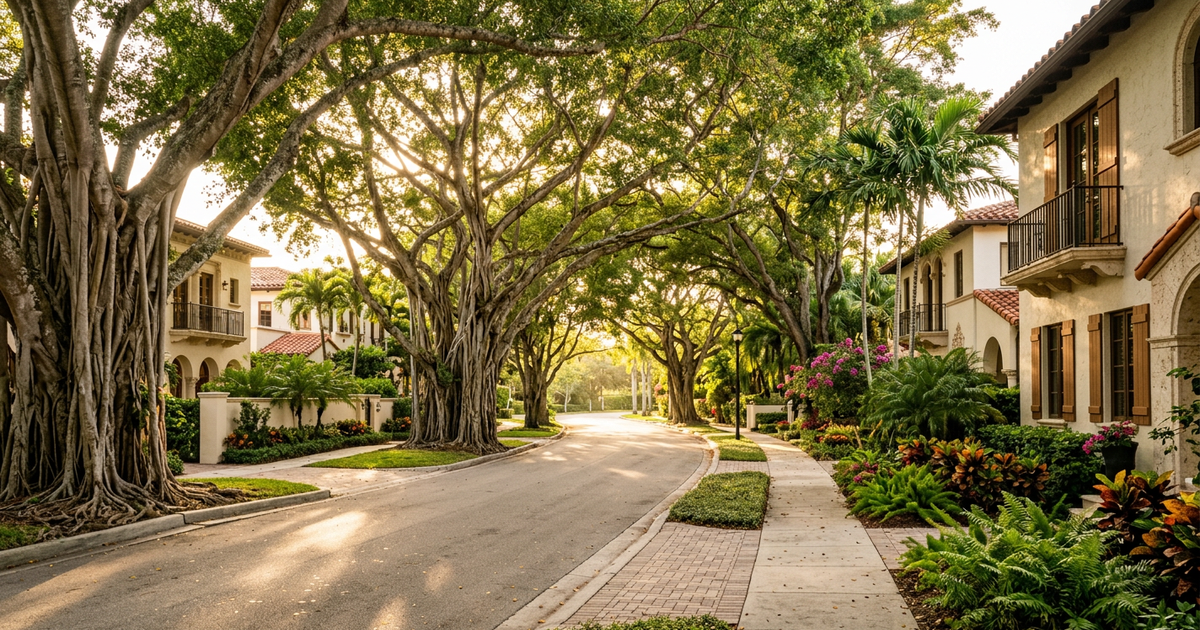
Across Miami’s luxury corridors right now, the same conversation keeps happening. A buyer finds the right neighborhood, falls in love with a specific block in Coral Gables or a particular street in Coconut Grove, then decides to wait. Rates are too high. They’ll come down. It’ll make more sense in a year or two. While it sounds cautious and prudent, it often proves to be a costly misstep. Understanding why comes down to one principle: mortgage rates in Miami can be refinanced; the right home cannot be recaptured once it’s bought by someone else.
Additionally, home appreciation will make it even more expensive to put that purchase off. The trade-off between waiting for rates to come down and home value appreciation could cost you thousands of dollars if not 10’s of thousands.
Debra Wellins is a Luxury Real Estate Advisor with Berkshire Hathaway HomeServices EWM Realty, specializing in Miami’s most sought-after neighborhoods, including Coral Gables, Pinecrest, and Coconut Grove. With over 15 years of experience, $32M+ in sales, and recognition as the #1 agent in her office in 2023, she brings a calm, client-first advisory approach backed by a Master’s from FIU and a Bachelor’s from Northwestern. She holds GRI and CLHMS designations.
Why Mortgage Rates in Miami Are the Wrong Variable to Watch
Waiting for rates to drop rests on the misconception that mortgage rates are the primary variable in a real estate decision. They are not. The property is.
In Miami’s luxury corridor, the right home at the right price point does not hold a spot for you. When a well-finished, correctly priced home in the $3M to $5M range hits the market in Coral Gables, Pinecrest, or Coconut Grove, it moves. Buyers watching from the sidelines rarely get a second chance at that specific property on that specific street. Rates, by contrast, are refinanceable. If rates drop two points next year, you call your lender and restructure under a new note. You do not lose that option because you bought when rates were higher. What you cannot do is go back and purchase a home that someone else bought while you were waiting.
Every month of hesitation carries two costs that waiting buyers consistently underestimate: equity that isn’t accumulating, and a narrowing window on limited inventory at desirable price points. While the Consumer Financial Protection Bureau’s homeownership resources offer a useful framework for understanding the total cost of ownership, the Miami-specific math is much more direct.
What the $3M to $5M Miami Market is Signaling Right Now
In Coral Gables, Coconut Grove, and Pinecrest, the $3M to $5M segment is absorbing faster than either the entry-luxury or ultra-luxury tiers. That is not a coincidence.
This is where inventory is most competitive, the buyer pool is qualified and serious, and correctly priced homes are not sitting. Below that range, demand is extraordinary, and inventory is nearly nonexistent. Above it, the ultra-luxury segment moves on its own timeline. In that middle band, however, the five-bedroom move-up home in Pinecrest, the Mediterranean two-story in the Gables, and the Grove estate with walkability and tree canopy are all seeing active markets. Engaged buyers are finding real opportunities.
Waiting for rates to reset before entering this segment means waiting for a market that may look structurally different when you return. The buyers competing with you for that home are not waiting. If you want to understand how different neighborhoods are actually performing street by street, the Miami real estate market overview walks through exactly those dynamics.
How the Buy Now, Refinance Later Strategy Actually Works
Debra Wellins has spent fifteen years guiding buyers through exactly this kind of market uncertainty. Her perspective on rate hesitation is direct.
“While you’ve lost some buying power with higher interest rates, if you can afford the purchase, jump in the market. Buy a home instead of renting and supporting a landlord’s property. Real estate’s such a good investment. You can always refinance. If the rates drop two points, refinance your loan.”
– Debra Wellins, Luxury Real Estate Specialist / Sales Associate
That is not a sales pitch. It is a structural fact about how mortgage financing works under Fannie Mae’s standard loan guidelines. Buying now and refinancing when rates improve is a path that generations of buyers have followed successfully. A refinance replaces your existing loan with a new one at a lower rate, reducing your monthly payment without eliminating the equity or appreciation you captured since purchasing. What those buyers did not do was let the rate environment prevent them from acquiring an asset that would appreciate while they waited.
The loan-to-value ratio (LTV) on a Miami luxury purchase can actually improve your refinancing position if values hold or rise, meaning the decision to buy early strengthens, not weakens, your future rate negotiation.
The Hidden Cost of Staying on the Sidelines
The carrying cost of waiting rarely gets calculated honestly.
Inventory. Miami’s luxury single-family market has seen inventory increases in some segments, but genuinely great homes remain difficult to find. Well-finished, correctly positioned homes on desirable streets generate real competition even in a more balanced market. Waiting for a lower rate does not create more inventory. It gives other buyers more time to find what you are looking for.
Equity. A buyer who enters at a higher rate but purchases in a neighborhood with steady long-term appreciation begins building equity immediately. A buyer who waits two years for rates to fall spends those two years contributing to a landlord’s equity instead of their own.
Opportunity cost. The property does not pause while you decide. Every month a qualified buyer delays is an investment window that closes. The National Association of Realtors®’ research on housing wealth consistently shows that time in the market outperforms timing the market for residential real estate.
If you have been watching from the sidelines and you are genuinely ready to move, the question worth asking is not “where are rates headed?” It is: “Is the right home available right now?” Talk to Debra about your specific situation before the next Fed announcement reshapes the conversation.
Debra puts the opportunity-cost question directly to buyers navigating this hesitation.
“Every month that you didn’t purchase a home, you missed opportunity to build equity. Real estate is a great investment provided you buy in a neighborhood with long-term stability and increasing value and you don’t significantly overpay.
– Debra Wellins, Luxury Real Estate Specialist / Sales Associate
What to Do Instead of Waiting for Rates to Drop
If you have been holding off until rates move, the more productive question is: what does the right home look like, and is it available now?
That conversation, covering neighborhoods, lifestyle fit, school districts, insurance complexity, and price-per-square-foot relative to your timeline, is worth having before the next market shift, not after it. Coral Gables carries strict zoning and a historic canopy ordinance that limits supply. Pinecrest offers large-lot family homes with top-rated schools and little commercial zoning. Coconut Grove balances bayfront estates and townhomes with charm and walkable village character. Understanding these distinctions is essential before you decide whether the timing works in your favor. For a detailed side-by-side of these two neighborhoods, the Coconut Grove vs. Coral Gables comparison breaks down what buyers actually experience on the ground.
Miami’s luxury markets do not wait for Federal Reserve announcements. The Gables or Grove street you fell in love with will not hold.
You should also understand the insurance dimension before you buy. In South Florida, a home’s insurability can be as consequential as its price, and some properties that look right on paper carry insurance variables that affect financing. The piece on why insurance eligibility affects home financing in Miami covers exactly what to evaluate before you make an offer.
Frequently Asked Questions
Does it make sense to buy when mortgage rates in Miami are high?
For most buyers in a supply-constrained luxury market, the more important question is whether the right property is available, not where rates are today. Rates can be refinanced when they fall. A specific home on a specific street in Coral Gables or Pinecrest cannot be recaptured once another buyer purchases it. Buyers who enter the market at higher rates and refinance later have followed this path successfully for decades.
What does it mean to buy now and refinance later?
When you purchase a home at today’s rates, you retain the option to refinance your mortgage if rates drop meaningfully. Refinancing replaces your existing loan with a new one at a lower rate, reducing your monthly payment. You do not lose the equity you have built or the appreciation you have captured between purchase and refinance.
How is Miami’s luxury market performing in the $3M to $5M range?
In Coral Gables, Pinecrest, and Coconut Grove, absorption rates in the $3M to $5M tier are faster than in either the entry-luxury or ultra-luxury segments. Well-priced, well-finished homes in desirable locations are moving quickly, even in a higher-rate environment. Buyers who engage actively are finding real opportunities. Buyers on the sidelines are watching those homes close.
What are the real costs of waiting to buy a home in Miami?
Waiting carries three compounding costs: missed equity accumulation in an appreciating market, reduced inventory as other buyers claim available homes, and the opportunity cost of building your landlord’s equity rather than your own. In markets with limited luxury inventory, these costs often exceed any savings from a marginally lower rate.
Should I worry about condo assessments and insurance when buying in Miami?
Yes. Insurance premiums and special assessments are meaningful variables in Miami’s luxury market, particularly in the condo segment. Buyers should evaluate reserves, pending assessments, inspections and current insurance costs as part of the total cost of ownership, not just the purchase price and mortgage rate. These factors vary significantly building by building and should be reviewed before making an offer.
Does waiting for lower rates guarantee a better deal?
Not necessarily. When rates fall, buyer demand typically increases, which puts upward pressure on prices and creates more competition for the same inventory. A buyer who waits for a lower rate may find that the price of the home they wanted has increased enough to offset the rate savings, or that the specific property is no longer available.
How do Miami’s luxury neighborhoods differ for buyers evaluating timing?
Coral Gables, Pinecrest, and Coconut Grove each behave differently at the street level. Coral Gables carries strict zoning, great location and a historic canopy ordinance that limits supply. Pinecrest offers large-lot family homes with top-rated schools and less commercial zoning. Coconut Grove balances charming forested homes and waterfront estates with location with walkable village character. Understanding these distinctions, not just price-per-square-foot, is essential to evaluating whether the timing works in your favor.
How do I know if the timing is right for my situation?
Timing depends on your financial position, your lifestyle priorities, and what is actually available in the neighborhoods you are targeting. A qualified advisor with current market knowledge can model your specific scenario, including total cost of ownership, rate sensitivity, and neighborhood inventory, and give you an honest read on whether now makes sense for you. If you are financing your purchase, it is also worth understanding how to structure a financed offer that can win in Miami’s luxury market.
Ready to Evaluate Your Timing With Real Numbers?
The rate environment will shift. It always does. The question is whether the home you want will still be available when it does. If you are considering a move in Coral Gables, Coconut Grove, Pinecrest, or anywhere in South Miami-Dade, reach out to Debra Wellins for a direct conversation about what the market looks like for your specific situation right now. There is no pressure, just real numbers and an honest read on current inventory.