
Radon Found in a Three-Year-Old Coconut Grove Condo Tower
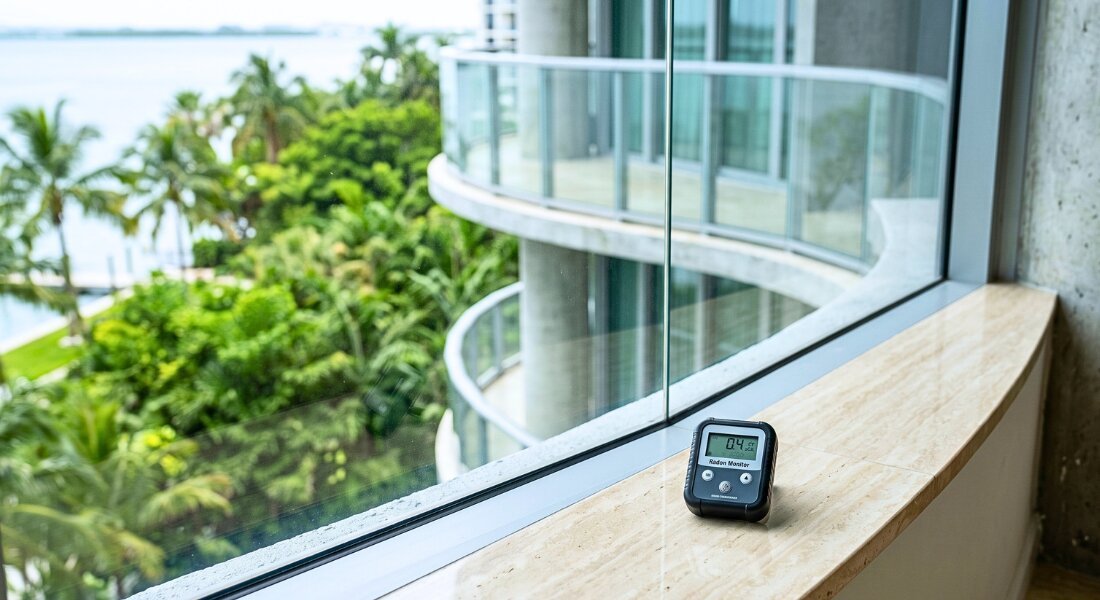
Radon testing is not standard practice in most Miami condo transactions, but a recent case shows why buyers should reconsider. A buyer ordered a radon test during the inspection period, an uncommon precaution in South Florida. Results came back above 4 picocuries per liter, the EPA’s action level.
The building notified every unit owner and tenant. Testing expanded to hallways and select apartments, with some areas showing elevated readings. In contrast, others remained below the EPA action level.
This was a brand-new luxury tower in one of Miami’s most sought-after neighborhoods. The situation exposes a gap in how Miami condo buyers approach due diligence.
Radon testing is not standard practice in many Miami condo transactions. A recent case in a three-year-old Coconut Grove luxury tower shows why buyers should consider it. Elevated radon triggered building-wide notifications, additional testing, and a complex response. The case gives Miami condo buyers another reason to include radon testing in their due diligence, especially when evaluating newer high-rise properties.
Why Radon Matters in Miami Buildings
Radon is a naturally occurring radioactive gas produced by the breakdown of uranium in soil and rock. It is colorless and odorless, so testing is the only way to detect it. Long-term exposure to elevated radon levels is the second leading cause of lung cancer in the United States, after smoking. The Florida Department of Health’s radon program provides information on the risks.
Radon testing has remained uncommon in many Miami condo transactions, partly because South Florida is not typically associated with radon risk. That assumption deserves another look. Both the EPA and Florida Department of Health recommend testing regardless of geography or building age. The Coconut Grove situation is a clear reminder that radon is not just a basement problem in northern and western climates.
In this particular tower, building materials are one possible source under investigation. Some concrete mixes incorporate fly ash or other industrial byproducts that contain naturally occurring radioactive materials. Whether that contributes to the elevated readings remains to be determined. Regardless of the source, remediating an occupied luxury tower can be a significant technical, financial, and logistical undertaking.
How It Affects Miami Condo Buyers
For buyers, the practical implication is straightforward: radon testing should be part of the inspection process. The cost of testing is relatively small compared with the purchase price of a Miami condo.
Testing in condos is more complex than in single-family homes because radon levels can vary across floors and units. Florida health officials have found elevated radon levels throughout high-rise multifamily buildings. EPA guidance also recommends testing across multiple floors because radon can move through shared pathways such as shafts and chases.
That variability is part of what makes condo radon situations difficult to evaluate. When one unit returns an elevated result, additional testing can help determine whether the issue is isolated or more widespread.
What Sellers Should Do Before Listing
For sellers, the calculation is straightforward. If radon is present and a buyer’s inspector discovers it, the finding can enter negotiations during the inspection period. That is when a deal can be especially vulnerable.
If elevated levels are confirmed, remediation options are available. Mitigation systems can reduce radon levels by drawing the gas away from the building and venting it outdoors. Addressing the issue before a buyer finds it also gives the seller more control over timing, documentation, and negotiation.
Debra now recommends pre-listing radon testing to sellers who want to identify potential issues before going to market.
“Condo management notified all the unit owners and tenants in the building about elevated radon levels. My tenant hired a company to test her apartment. Shockingly, her landlord refused to test. The radon levels, averaged over a 48 hour period, were considered acceptable. However, they spiked during early morning hours, which was cause for concern to the tenant. This particular condo was built only three years ago. So it’s not a factor of age. I now recommend radon testing to every buyer regardless of whether it’s a house or condo, old or new. I also suggest to my sellers to spend the $300 to know the radon exposure in advance of listing their home. If elevated levels are found, it’s better to remediate it in advance so it’s not an inspection issue and better for the current owners health.
— Debra Wellins, Luxury Real Estate Advisor, Berkshire Hathaway HomeServices EWM Realty
Not sure whether your pre-listing inspection strategy covers radon? Talk to Debra Wellins before you go to market. A pre-listing test can help you address potential issues before they become part of the negotiation.
What Radon Remediation Looks Like
An elevated test result does not automatically end a transaction. For single-family homes, radon mitigation is relatively well established. A contractor can install a sub-slab depressurization system that draws radon from beneath the foundation and vents it outside. Costs vary based on the property’s construction and the mitigation method required. Post-mitigation testing confirms whether radon levels have been reduced.
Condos are more complicated. Radon can enter from soil beneath the building, while building materials can also contribute in some cases. Mitigation is still possible, but solutions become more complex when an entire multi-unit building is involved. EPA recognizes specific mitigation standards for existing multifamily buildings. When building materials contribute to elevated levels, the path to remediation can be less straightforward.
That complexity is why addressing the issue early can make financial sense. Testing before listing or before an offer gives both sides more information before the inspection period begins. Sellers can address concerns proactively, while buyers can understand potential costs before committing to the purchase.
Radon Testing Belongs on the Miami Checklist
The Coconut Grove situation reinforced something Debra was already recommending: consider radon testing on every transaction, whether buying or selling. A three-year-old luxury tower with elevated readings shows why building age alone cannot rule out the need for testing.
The same consideration can apply across property types, from single-family homes in Pinecrest, Coconut Grove and Coral Gables to newer condo towers near the bay. A relatively small testing expense can help prevent a much larger surprise during inspections and negotiations.
For more on condo due diligence, see Florida’s New Condo Safety Laws for Miami Buyers. It covers the documents and disclosures buyers should review before closing.
Radon Questions for Miami Buyers and Sellers
Is radon a real concern in Miami real estate?
Yes. Radon can occur in Florida buildings regardless of age or location. The EPA and Florida Department of Health recommend testing because radon cannot be detected without a test. A recent case in a three-year-old Coconut Grove luxury tower shows that even new construction can have elevated radon levels.
How much does radon testing cost in Miami?
Radon testing costs vary depending on the testing method and provider. Short-term test kits can be relatively inexpensive, while professional testing typically costs more. Buyers should confirm the testing method, testing period, and total cost before scheduling. Sellers may also choose pre-listing testing to identify potential issues before a buyer’s inspection.
What is pCi/L, and what does my radon result mean?
Picocuries per liter (pCi/L) is the standard unit used to measure radon concentration in air. The EPA recommends taking action when levels reach 4 pCi/L or higher. Readings between 2 and 4 pCi/L are below the EPA action level, but the EPA recommends considering mitigation within that range. The average indoor radon level in U.S. homes is approximately 1.3 pCi/L.
What happens if elevated radon is found in a Miami condo?
The next steps depend on the building and the extent of the elevated readings. Additional testing may help determine whether the issue is isolated to one unit or affects multiple areas. Building management may need to investigate potential sources, evaluate common areas, and determine whether mitigation is necessary. Buyers should review the testing results and any remediation plans before deciding how to proceed.
Can radon be remediated in a high-rise condo?
Yes, but remediation can be more complex than in a single-family home. Multi-unit buildings may require specialized mitigation systems, additional testing, and coordination among owners, tenants, and building management. The appropriate solution depends on the source and extent of the elevated radon. Post-mitigation testing can confirm whether levels have been reduced.
Should sellers test for radon before listing in Miami?
Pre-listing testing can help sellers identify potential issues before they become part of a buyer’s inspection. If elevated levels are found, sellers have more time to investigate the cause, consider mitigation, and document the results. Addressing the issue before listing can also give sellers more control over the timing and negotiation process.
Does an elevated radon result automatically kill a Miami condo deal?
No. An elevated result does not automatically end a transaction. Buyers and sellers can evaluate additional testing, potential mitigation, costs, and negotiation terms before deciding how to proceed. The key is understanding the scope of the issue and available options before making a decision.
Strengthen Your Inspection Strategy
The three-year-old Coconut Grove tower did not come with a warning label. Neither does a property’s age guarantee that radon is not present. For buyers, testing adds another layer of due diligence to a high-stakes transaction. For sellers, pre-listing testing can identify potential issues early and give them more control during negotiations.
If you are buying or selling in Coconut Grove, Coral Gables, Pinecrest, or greater Miami, connect with Debra Wellins at BHHS EWM Realty. She can help you build an inspection strategy that identifies potential issues before they affect negotiations.
ABOUT THE AUTHOR
Debra Wellins is a luxury real estate advisor with Berkshire Hathaway HomeServices EWM Realty, specializing in Miami neighborhoods including Coral Gables, Pinecrest, and Coconut Grove. With more than 15 years of experience and $48M+ in career sales, she brings a calm, client-first approach to every transaction. Debra was recognized as #1 in closed transactions in her office in 2023. She holds a Master’s from FIU, a Bachelor’s from Northwestern, and GRI and CLHMS designations.