Miami Real Estate Seasonality Explained for Buyers and Sellers
Miami’s real estate market runs on a rhythm most agents never explain to their clients. Inventory swells and shrinks on a predictable schedule, competition spikes and softens with the seasons, and the timing of your move shapes everything from your negotiating power to your school enrollment window. Once you understand how the Miami real estate seasonality cycle works, the market stops feeling chaotic and starts feeling navigable.
Miami real estate seasonality follows a consistent annual pattern: high season runs January through June, when inventory and buyer competition both peak. Summer brings fewer buyers and genuine negotiating room. Fall offers a quieter second wave before the holiday slowdown closes out the year.
What Drives Miami’s Busiest Months?
January through June consistently defines Miami’s high season, with March, April, and May carrying the most momentum. Three forces drive this pattern: relocation timelines, favorable weather, and sellers who intentionally concentrate their listings in early spring.
Relocation timelines anchor the spring push. Buyers arriving from New York, California, Canada, South America and Europe typically need to settle before the next school year begins, which means spring contracts make summer moves possible. Favorable weather pulls in additional traffic before hurricane season arrives. And sellers who list in early spring produce the year’s deepest inventory pool.
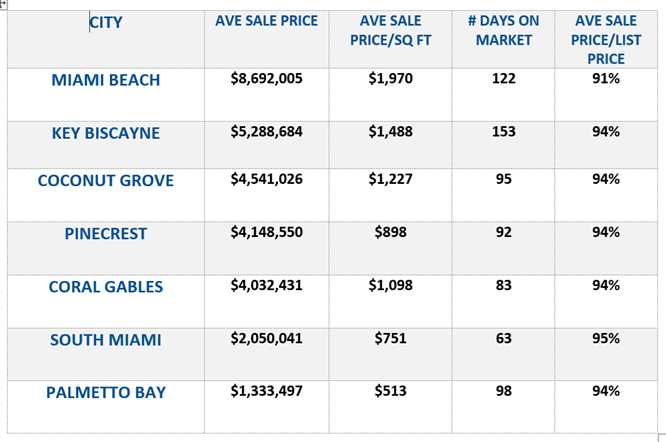
Buyers entering this window face real competition. In Coconut Grove, Coral Gables, Palmetto Bay, and Pinecrest, well-priced homes move in days, not weeks. Families on relocation timelines often build their entire visit around this window precisely because the selection justifies the effort.
How Does High Season Change the Math for Buyers and Sellers?
High season gives buyers the broadest inventory of the year. The right combination of floor plan, lot size, school zone, and commute distance tends to surface during these months. But expanded choice comes with compressed timelines.
Serious buyers need to arrive prepared: neighborhood and school research completed, finances confirmed, decision criteria clearly defined. Buyers who skip that preparation find themselves making rushed decisions on properties they haven’t fully evaluated, or losing homes to buyers who had already done the work.
For sellers, listing during high season means meeting the year’s most motivated audience. That advantage only materializes with preparation. Homes that move quickly in spring are decluttered, accurately priced against fresh comparable sales data, and positioned to make a strong first impression. Homes that drift into high season without that groundwork tend to linger far longer than their owners expect.
Debra has advised buyers and sellers across South Miami-Dade for over 15 years. Her perspective on high season reflects watching the same pattern play out across hundreds of transactions.
“Spring is when the greatest number of buyers are in the market. If a seller is ready, truly ready, that intersection of motivated buyers and well-prepared homes is where the best outcomes happen. Buyers who do their homework early get the best selection. Sellers who price honestly and prepare thoroughly get the cleanest and quickest offers.”
. Debra Wellins, Luxury Real Estate Advisor, Berkshire Hathaway HomeServices EWM Realty
Why the Summer Slowdown Rewards Patient Buyers
By July, the urgency eases. Families who needed to move before school locked in their decisions. Others paused for travel and summer routines. The pool of active buyers contracts, and homes that remain on the market either carried too high an initial price or appeal to a narrower audience.
For buyers who can work on a flexible timeline, summer offers real advantages. Sellers who have been on the market since spring feel the calendar pressure, and negotiation room that didn’t exist in April opens up by August. Multiple-offer situations become the exception rather than the rule. The National Association of Realtors tracks this shift nationally, but Miami’s pattern is particularly pronounced given the volume of spring relocation buyers who exit the market by June.
The trade-off is selection. Inventory in July and August runs thinner than spring, and the most desirable homes in the highest-demand neighborhoods typically sell before summer arrives. Buyers who adjust their criteria slightly and stay engaged tend to find genuine value. Those who wait for the perfect listing sometimes wait longer than expected.
Not sure how to evaluate a summer listing against spring comparable sales? Reach out to Debra Wellins before you write an offer; context on recent sales makes a meaningful difference in how you price a bid.
Does Fall Offer a Second Window Worth Watching?
September through mid-November generates a quieter but meaningful resurgence. Sellers who paused over summer return to the market. Relocation buyers planning a spring move begin their neighborhood research during this window, which puts motivated, informed buyers back into circulation.
Turnkey homes in Coral Gables and Coconut Grove attract steady attention in fall. Neighborhood-specific patterns matter here: Palmetto Bay and Pinecrest see early planners researching school enrollment and staking out inventory before January competition arrives. For buyers who want a measured pace without waiting for the new year, fall delivers reasonable selection and noticeably less pressure than peak spring.
One consideration worth raising: hurricane season runs June through November, with peak activity in August and September. The National Hurricane Center tracks storm activity that can affect property inspection scheduling, insurance timelines, and buyer confidence during fall transactions. Buyers and sellers who understand how this overlaps with the fall window can plan accordingly rather than being caught off guard.
What Should Sellers and Buyers Expect During the Holiday Pause?
Late November through December represents Miami’s quietest stretch. Buyers travel. Sellers hesitate to schedule showings through the holidays. Many participants simply wait for January, when fresh listings and renewed buyer energy restart the cycle.
Transactions still happen. Buyers touring during this period tend to be serious; they are not casually browsing in December. Some deals accelerate for year-end tax planning purposes, and a motivated seller who needs to close before January can often find a buyer willing to move quickly. But overall volume runs low, and sellers who enter this window expecting spring-level activity typically leave disappointed.
Sellers listing in December should set honest expectations and price accurately. Buyers shopping in December should expect fewer options but will encounter sellers who are genuinely motivated to close. Debra explored this dynamic in detail in “What the Holiday Slowdown Really Means for Miami Real Estate” if you want a deeper look at how to use that window strategically.
How Does Miami Real Estate Seasonality Shape the Relocation Experience?
For buyers arriving from out of state or internationally, Miami real estate seasonality determines more than home selection; it shapes the entire relocation experience. A February visit means busy open houses, competitive offers, and fast-moving decisions. A July visit means a slower pace, thinner inventory, and more room to think.
Beyond inventory, the seasonal calendar intersects with school enrollment deadlines, temporary housing logistics, moving company availability, and insurance timelines that shift around hurricane season. The Consumer Financial Protection Bureau notes that buyers who enter a transaction without understanding local market timing often face avoidable delays. In Miami, that means understanding the seasonal cycle before you book your trip.
A family that begins neighborhood research in January and tours in February enters spring with a clear shortlist. A family that begins research in May enters spring already behind. The case for starting early isn’t about urgency; it’s about arriving informed.
For a deeper look at how to structure a Miami relocation from the ground up, this relocation guide covers the neighborhood research process from first questions to final decision.
Frequently Asked Questions
When does Miami real estate seasonality bring the most inventory?
January through June brings the highest concentration of new listings. March, April, and May typically represent the peak, when sellers time their listings to capture the year’s largest pool of motivated buyers. Buyers touring during this window see the widest selection across all price points and neighborhoods.
Is summer actually a good time to buy in Miami?
Summer works well for buyers who prioritize negotiating room over selection. Fewer competing buyers in July and August means sellers are more open to price adjustments and contingencies. The trade-off is a thinner inventory pool, so buyers who need a specific combination of features may need to wait longer or stay flexible on a few criteria.
Does listing in December make sense for Miami sellers?
It depends on the seller’s situation. December brings lower volume but attracts genuinely motivated buyers. Sellers who need to close by year-end for financial or tax reasons can find willing buyers during this window. Sellers with no urgency are usually better served waiting for January or February, when buyer energy and inventory both rebound.
How does hurricane season interact with fall real estate activity?
Hurricane season runs June through November, with peak activity in August and September. It influences buyer behavior more than pricing. Some buyers avoid committing during peak storm months, which slightly reduces summer and early fall competition. Insurance timelines can affect how quickly transactions close, particularly for properties in flood zones or coastal areas. The Florida Office of Insurance Regulation provides current guidance on policy requirements that affect closings.
Why do school districts affect Miami’s seasonal pattern so strongly?
Many buyers with school-age children coordinate their move with the academic calendar, targeting spring contracts so moves complete before August. Neighborhoods like Palmetto Bay and Pinecrest draw heavily from school-motivated buyers and see particularly pronounced spring activity as a result. The fall secondary window also picks up buyers who want to lock in a home before January competition returns.
How far ahead should relocation buyers plan their Miami visit?
Two to three months before the intended visit is a practical target. That lead time allows buyers to research neighborhoods, understand price ranges, and prepare finances before stepping into a property. Arriving already educated on the market shortens the decision timeline significantly. Debra covers the first steps of that process in “Why Relocation Success Starts With Planning.”
Do international buyers follow the same seasonal pattern?
Broadly yes, with some variation. Buyers from Latin America and Europe often concentrate activity in winter and early spring to align with favorable weather and their own calendar rhythms. Cash buyers in this group can move faster than financed buyers, which makes their competition particularly felt during peak season in Brickell, Coconut Grove, and Coral Gables. Understanding that dynamic helps financed buyers calibrate their approach during high season.
Should sellers always target spring for the best price outcome?
Spring delivers the largest buyer audience, but well-prepared homes sell in every season. Condition, pricing accuracy, and presentation consistently outperform timing as drivers of outcome. Sellers with genuinely appealing homes in strong neighborhoods should not assume they need to wait for spring if their situation calls for an earlier move. Overpricing to “test the market” in spring carries its own risk; Debra breaks that down in “The Real Cost of Overpricing Your Home in Miami.”
Plan Your Move Around the Market, Not Against It
Miami’s seasonal rhythm is one of the most reliable tools available to buyers and sellers who want to reduce stress and improve outcomes. High season delivers inventory and competition. Summer rewards patience and negotiating skill. Fall offers a quieter second window. The holiday period favors the serious over the casual.
Understanding Miami real estate seasonality doesn’t require a crystal ball. It requires knowing which season fits your situation and building your plan accordingly. Whether you’re relocating from across the country, upgrading within South Miami-Dade, or timing a sale around a life change, the seasonal framework gives you a foundation for decisions that feel grounded rather than reactive.
Contact Debra Wellins to match your timeline to Miami’s market rhythm and build a plan around your specific situation.
About the Author
Debra Wellins is a luxury specialist at Berkshire Hathaway HomeServices EWM Realty. A BHHS EWM Realty Chairman’s Club honoree, she holds GRI and CLHMS designations and has guided buyers and sellers across Coral Gables, Pinecrest, Coconut Grove, and South Miami for more than 15 years.